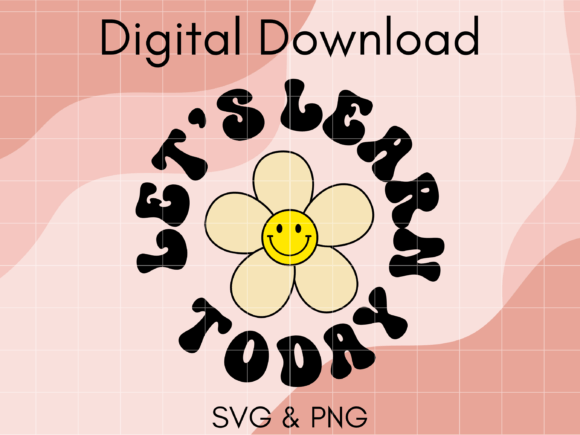
Reviewing the Teacher Let’s Learn Today SVG for Embroidery
As a designer who spends more time staring at stitch simulations than I care to admit, I approach every new digital embroidery file with a mix of optimism and skepticism. We have all been there: you download a cute graphic, load it into your software, and realize the lines are too thin for a satin stitch or the details will vanish on textured fabric. That is why I took a close look at the Teacher Let s Learn Today Shirt SVG PNG to see how it translates from a screen graphic to a tangible, stitched reality.
This design falls squarely into the Crafts and Graphics categories, but its potential extends far beyond simple sublimation. While the product description highlights its use for sublimation crafts, including an SVG and a PNG on a transparent background, my focus here is on how we can adapt this asset for high-quality machine embroidery. For Etsy sellers, boutique owners, and hobbyists, understanding the gap between a vector file and a finished stitch-out is crucial for maintaining professional standards.
First Impressions: Mood and Visual Personality
The phrase "Let's Learn Today" carries an inherent warmth and encouragement. It is not just text; it is a sentiment. Visually, the typography in this SVG suggests a friendly, approachable aesthetic, likely featuring rounded edges or playful serifs that appeal to the education sector. When I visualize this as an embroidery project, the mood shifts from digital flatness to tactile comfort. The design feels right at home on items associated with care and growth, such as baby clothes, teacher appreciation gifts, or cozy home decor.
However, the visual personality of the source file dictates our stitching strategy. Since this is provided as an SVG and PNG, we are working with vector paths and raster images, not a pre-digitized machine embroidery design. This means the burden of digitizing falls on us. The clean lines of the SVG are a blessing, offering clear boundaries for satin stitch borders or fill stitch interiors. But we must be mindful of the scale. What looks balanced on a website thumbnail might become a dense blob if stitched too small on a cap.
Real-World Application: From Screen to Stitch
Let’s consider a realistic scenario. Imagine you are preparing a custom order for a local preschool teacher. She wants a personalized tote bag for carrying books and supplies. This is where the Teacher Let s Learn Today Shirt SVG PNG shines. A tote bag offers a large, stable canvas, allowing the text to breathe. Using a sturdy cotton canvas, you can employ a medium-density fill stitch for the letters, ensuring durability against the weight of books.
Alternatively, think about sweatshirt embroidery. A crewneck sweatshirt is a staple for educators. Here, the fabric texture is plush and slightly uneven. If you were to use this design on a fleece-lined hoodie, you would need to adjust your stitch density to prevent puckering. The playful nature of the text complements the casual comfort of a sweatshirt, making it a perfect personalized gift for Teacher Appreciation Week or the end of the school year.
For those running a craft business, versatility is key. This design could easily be adapted for an embroidered patch. By adding a thick satin border around the text, you create a self-contained unit that can be ironed or sewn onto denim jackets, backpacks, or aprons. Patches are a trending item among Etsy sellers because they allow customers to customize their own garments, expanding your market reach without needing to stock every clothing size.
Navigating Technical Challenges
While the design is charming, it is not without its technical pitfalls. Because we are starting with an SVG and PNG rather than a native embroidery file, we must exercise caution regarding hoop size and detail resolution. Tiny lettering is the enemy of embroidery. If the font includes delicate serifs or tight kerning, these features may collapse under the needle. I always recommend testing the design on scrap fabric first, specifically using the same thread and stabilizer combination you plan to use for the final finished product.
Consider the fabric type. On thin or stretchy fabrics, such as jersey knits used for t-shirts, the tension of the stitches can cause distortion. A cut-away stabilizer is non-negotiable here. For dark fabrics, you must consider thread colors carefully. A light-colored thread on a dark shirt requires precise underlay stitching to prevent the background fabric from showing through the gaps in the top stitching. Conversely, on light fabrics, you might opt for a slightly denser fill to ensure opacity.
Curved surfaces present another challenge. If you intend to place this design on a cap, the curvature of the crown can distort horizontal text. You may need to arc the text digitally before digitizing or accept a slight visual warp. Additionally, avoid placing dense stitch areas near seams or zippers, as this can lead to needle breaks or uneven feeding through the machine.
Enhancing Product Value and Brand Consistency
How does this design affect your brand? For small shop products, consistency is vital. If your brand aesthetic is whimsical and hand-drawn, this design fits perfectly. If your brand is minimalist and modern, you might need to simplify the digitizing style, perhaps opting for a single-line running stitch outline instead of a filled look. The quality of the stitch-out directly influences customer trust. A clean, well-digitized design signals professionalism, while pulled threads or loose ends suggest haste.
From a marketing perspective, this design has high "giftability." It appeals to parents, students, and colleagues looking for meaningful presents. When creating printable mockups or digital previews for your online store, ensure the images reflect the actual texture of the embroidery. Show the sheen of the rayon or polyester thread. Highlight the dimensionality. This helps manage customer expectations and reduces return rates.
Practical Notes for the Designer
Before you commit to production, keep these practical steps in mind:
- Check Licensing: The product description mentions it is a digital download for sublimation. Verify if the creator grants rights for commercial embroidery use. Just because you can stitch it does not mean you can sell it without permission.
- Digitize with Care: Since this is an SVG/PNG, you must digitize it yourself or hire a digitizer. Do not assume auto-digitizing will yield perfect results. Manual editing of stitch angles and densities is essential for a premium look.
- Test Contrast: Create black and white mockups to check readability. If the design loses its shape in monochrome, it may be too complex for small-scale embroidery.
- Select the Right Stabilizer: Match your stabilizer to your fabric. Use tear-away for woven cottons and cut-away for knits. Proper stabilization prevents puckering and ensures the design lies flat.
- Inspect Small Details: Zoom in on your digitized file. Are there any tiny islands of stitches that might jump or break? Simplify complex corners to ensure smooth machine operation.
In conclusion, the Teacher Let s Learn Today Shirt SVG PNG is a versatile asset for the creative entrepreneur. It bridges the gap between digital graphics and tactile handmade products. Whether you are creating holiday embroidery for gifts, custom apparel for clients, or design assets for your portfolio, this design offers a warm, educational theme that resonates with buyers. By respecting the technical limitations of embroidery and applying thoughtful digitizing practices, you can transform this simple graphic into a standout piece that enhances your reputation as a skilled maker.
Remember, the difference between a good product and a great one often lies in the details. Take the time to test, refine, and perfect your stitch-out. Your customers will notice the quality, and your brand will thrive on the reputation of excellence. Happy stitching!