Tiny Human Tamer: A Designer’s Sublimation Review
As an experienced designer who spends more time staring at stitch simulations than I care to admit, I have learned that not every cute graphic translates well into a tangible product. We often get swept up in the trendiness of a phrase or the charm of an illustration, forgetting the mechanical realities of thread, fabric, and tension. Recently, I evaluated TINY HUMAN TAMER Sublimation, a design marketed primarily for teachers and new year themes. While the product description highlights its utility as a sublimation PNG, my focus was strictly on how this asset performs when adapted for real-world embroidery projects. For Etsy sellers, boutique owners, and hobbyists, understanding the gap between a digital file and a finished stitched item is crucial for maintaining professional standards.
First Impressions and Visual Personality
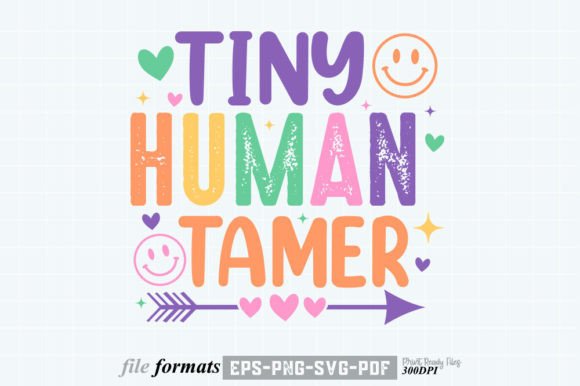
The first thing that strikes you about TINY HUMAN TAMER Sublimation is its bold, confident typography mixed with playful imagery. The phrase itself carries a humorous, relatable weight, particularly for educators or parents who manage chaotic energy daily. Visually, the layout is compact, fitting within a 12×12 inch square at 300 dpi. This resolution is standard for high-quality printing, but for us in the embroidery world, it serves as a reference for scale and proportion.
The mood is lighthearted yet authoritative. It does not scream for attention with overly complex details; instead, it relies on strong shapes and clear lettering. This simplicity is a double-edged sword in embroidery. On one hand, clean lines are easier to digitize and stitch out cleanly. On the other hand, if the original graphic relies too heavily on subtle gradients or thin strokes, those details can get lost under the texture of thread. My initial assessment suggests that this design has the structural integrity to work well as an embroidery project, provided the digitizer respects the weight of the original fonts.
Real-World Application: The Teacher’s Tote
To test the viability of this design, I imagined a specific use case: a custom canvas tote bag for a preschool teacher. This is a classic handmade product that sells consistently on platforms like Etsy. The "Tiny Human Tamer" slogan fits perfectly here, offering a mix of professional pride and humor.
In this scenario, the design would need to be scaled down from its maximum 12-inch potential to fit comfortably on a standard tote panel, likely around 6 to 8 inches wide. When working with canvas or heavy cotton, the fabric texture plays a significant role. A design with too much stitch density can cause puckering, while one that is too sparse might let the fabric show through awkwardly. Because TINY HUMAN TAMER Sublimation features bold elements, it lends itself well to a combination of fill stitch for the larger graphical components and satin stitch for the text borders. This approach ensures the letters remain legible and crisp, even from a distance.
For a personalized gift or a small shop product, the visual appeal here is high. Customers are drawn to items that reflect their identity. A teacher wearing a sweatshirt or carrying a bag with this design feels seen and appreciated. The key is ensuring the thread colors contrast sufficiently with the background fabric. If you are stitching on a natural beige tote, deep navy or forest green threads would ground the design, whereas bright primary colors might look too juvenile for a professional educator.
Navigating Technical Challenges
While the concept is strong, there are areas where caution is necessary. The product description notes that you receive a PNG file. It is vital to understand that a PNG is a raster image, not a vector or an embroidery file. You cannot simply load this into your embroidery machine. It requires careful digitization. If you are an Etsy seller or a craft business owner, you must either digitize this yourself using specialized software or hire a professional digitizer.
One major concern with phrase-based designs is the thickness of the lettering. If the original sublimation design uses very thin font weights, translating that into embroidery can be problematic. Thin lines require delicate satin stitches that can easily break or snag during washing. I recommend checking the design in black and white mockups to see if the contrast holds up without color. If the letters appear fragile in monochrome, they will likely be problematic in thread.
Additionally, consider the hoop size. If you are aiming for a sweatshirt embroidery placement on the left chest, you are limited to a 4x4 or 5x7 hoop. You must ensure the design scales down without losing readability. Tiny details, such as small decorative accents around the text, may need to be simplified or removed entirely to prevent thread breaks and excessive jump stitches. For curved surfaces like caps, the design needs to be warped slightly in the digitizing phase to account for the curvature, otherwise, the text will appear distorted once stitched.
Fabric and Stabilizer Considerations
The success of any commercial embroidery project hinges on the interaction between thread, fabric, and stabilizer. For TINY HUMAN TAMER Sublimation, I would recommend using a cut-away stabilizer for knit fabrics like t-shirts and sweatshirts to provide long-term support. For woven fabrics like aprons or pillow covers, a tear-away stabilizer might suffice, depending on the stitch density.
Dark fabrics present another challenge. If you are stitching this design on a black hoodie, you cannot rely on the fabric color to fill in gaps. You may need to use an underlay stitch or even a light-colored backing fabric if the design has large open spaces. However, given the likely solid nature of this graphic, proper underlay stitching should be enough to ensure the top threads pop against the dark background.
Commercial Viability and Brand Consistency
From a business perspective, this design fits squarely into the niche of humorous, relatable apparel. It works well for holiday embroidery gifts, back-to-school promotions, or end-of-year teacher appreciation items. The versatility of the phrase allows it to transcend specific seasons, making it a valuable asset for your library of design assets.
However, always verify licensing. The product description mentions it is a sublimation design. Using a sublimation PNG as a basis for embroidery does not automatically grant you the right to sell the embroidered items commercially unless the license explicitly covers derivative works or commercial use in other mediums. Always check the terms before listing custom apparel or embroidered patches for sale. Protecting your business from copyright issues is just as important as the quality of your stitching.
Final Verdict for Makers
TINY HUMAN TAMER Sublimation is a promising candidate for embroidery adaptation. Its bold structure and clear message make it suitable for a variety of Crafts and Graphics applications, from baby items to adult apparel. To get the best results, treat the PNG as a visual guide rather than a final template. Invest time in proper digitizing, test on scrap fabric, and pay close attention to stitch density and thread contrast.
For the creative entrepreneur, this design offers a chance to create a high-value, emotionally resonant product. Whether you are making a single personalized gift for a friend or stocking your online store with small business merchandise, the key lies in execution. Respect the mechanics of the machine, choose your materials wisely, and let the humor of the design shine through clean, professional stitching. When done right, this design does not just decorate a garment; it connects with the wearer, adding genuine value to your handmade offerings.