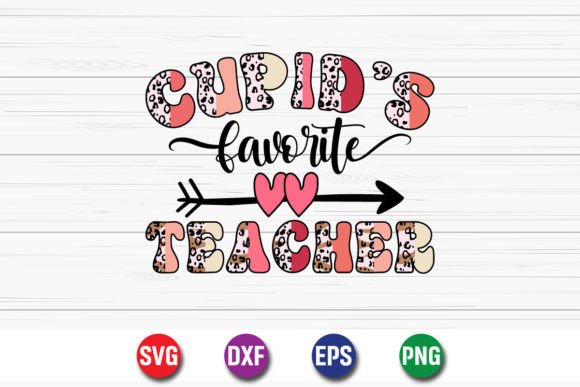
Cupid’s Favorite Teacher: A Designer’s Review
As an embroidery designer who has spent years digitizing patterns and troubleshooting stitch-outs for clients, I approach every new machine embroidery design with a critical eye. It is not enough for a graphic to look cute on a screen; it must translate flawlessly into thread. Recently, I evaluated Cupid s Favorite Teacher T-shirt Design to determine its viability for real-world projects. This review breaks down how this asset performs from a technical and aesthetic perspective, specifically for those of us running craft businesses or creating high-quality handmade goods.
First Impressions and Visual Personality
The immediate appeal of Cupid s Favorite Teacher T-shirt Design lies in its thematic clarity. It captures that specific, playful intersection of Valentine’s Day affection and classroom appreciation. The mood is lighthearted and sweet, avoiding the overly saccharine tropes that can sometimes plague holiday-themed graphics. From a layout perspective, the composition feels balanced. For embroidery, balance is crucial because uneven weight distribution can cause fabric puckering, especially on lighter materials.
What stands out is the potential for customization. The description notes that the files allow for possible and easy color changes. In my experience, this is a vital feature for Etsy sellers and boutique owners. School colors vary wildly, and teachers often have personal brand colors or favorite hues. A design that locks you into a single red-and-pink palette limits its commercial lifespan. The ability to tweak the thread colors means this embroidery file can transition from a February special to a general end-of-year gift with minimal effort.
Technical Composition and Stitching Potential
The product description mentions that the design is made with 100 vector shapes. For those of us in the Crafts and Graphics space, this is an interesting detail. While vector shapes are primarily associated with cutting machines like Cricut or Silhouette, their presence here suggests a clean, scalable underlying structure. If you are using this for electronic cutting to create an applique design, this is excellent news. Clean vectors mean smooth cut lines, which translates to precise fabric edges when you are layering materials.
However, if you are stitching this directly as a standard machine embroidery design, you must consider how these shapes translate to stitches. A design built from distinct shapes often relies on a mix of satin stitch borders and fill stitch interiors. When reviewing such a design, I always look for potential density issues. If the shapes are too small or packed too tightly, the needle perforations can weaken the fabric. Since specific stitch counts are not provided in the description, I strongly advise downloading a preview or testing a sample run on scrap fabric before committing to a final garment.
Real-World Application: The Custom Sweatshirt Test
To truly evaluate Cupid s Favorite Teacher T-shirt Design, I imagined a typical client scenario. A parent wants a personalized gift for their child’s preschool teacher. They choose a high-quality heather grey sweatshirt. This is a common request in my shop, and it presents specific challenges. Sweatshirt fleece is thick and textured. A design with fine details can get lost in the pile of the fabric.
In this context, the bold nature of the "Cupid" theme works in your favor. Larger elements will sit on top of the texture rather than sinking into it. I would recommend using a cut-away stabilizer to support the weight of the stitches, ensuring the design remains crisp after multiple washes. If you are creating a tote bag design instead, the canvas material provides a stable base, allowing for finer details to shine without the risk of distortion. For custom apparel like t-shirts, however, you must be cautious. Thin jersey knits require careful hooping and possibly a lightweight tear-away stabilizer to prevent the fabric from pulling away from the hoop during stitching.
Navigating Fabric and Hoop Constraints
One of the most critical aspects of using any digital embroidery file is understanding its limitations regarding hoop size and fabric type. While the exact dimensions are not listed in the provided text, the phrase "T-shirt Design" usually implies a chest-sized placement, likely fitting within a 4x4 or 5x7 inch hoop. If you intend to use this on a embroidered patch or a cap, you need to verify the scale.
Curved surfaces like caps introduce another layer of complexity. If the design has wide, flat areas of fill stitch, it may pucker on the curved panel of a baseball cap. In such cases, reducing the stitch density in your digitizing software—or choosing a version of the design optimized for hats—is essential. Similarly, when working with dark fabrics, you must consider thread colors. A light pink thread on a navy blue shirt may lack contrast unless you use an underlay stitch effectively. Always test your thread color combinations on a similar fabric swatch to ensure visibility and vibrancy.
Commercial Viability for Small Shops
For small shop product creators and craft business owners, the versatility of Cupid s Favorite Teacher T-shirt Design is its strongest asset. It fits neatly into several profitable niches: Valentine’s Day gifts, teacher appreciation week, and back-to-school promotions if the colors are adjusted. The "easy change color" feature allows you to create multiple mockups quickly, which is essential for your printable mockup listings and social media previews.
When selling finished product items, perceived value is key. A clean, well-stitched design elevates a basic tote or apron into a premium personalized gift. Customers trust designs that look professional. Sloppy stitching or poor color choices can undermine that trust. By taking the time to test the design on different fabric texture types, you ensure consistency across your inventory. Whether you are making baby embroidery items like onesies or holiday embroidery decor like pillow covers, the integrity of the stitch-out defines your brand reputation.
Practical Designer Notes for Best Results
Before you launch this design into your production line, consider these practical steps:
- Test on Scrap Fabric: Never stitch a new design directly on your final garment. Use a similar weight and type of fabric to check for puckering or thread breaks.
- Check Stabilizer Compatibility: Match your stabilizer to your fabric. Cut-away for knits and stretchy fabrics; tear-away for woven cottons and towels.
- Verify Licensing: The description mentions these are files for electronic cutting machines and craft projects. Always confirm whether the license allows for commercial embroidery sales. Some designers restrict the number of physical items you can sell.
- Inspect Small Details: If the design includes tiny text or intricate lines, zoom in. These areas are prone to thread bunching. You may need to simplify or enlarge these elements.
- Contrast Check: View your design in black and white. If the details disappear, you need higher contrast between your thread and fabric.
In conclusion, Cupid s Favorite Teacher T-shirt Design offers a charming, versatile option for spring and Valentine’s season projects. Its vector-based origin suggests clean lines suitable for both cutting and stitching, provided you manage your density and stabilizer choices wisely. For the creative entrepreneurs and makers among us, it represents a solid addition to your library of design assets, capable of producing high-quality, sellable goods when handled with professional care.