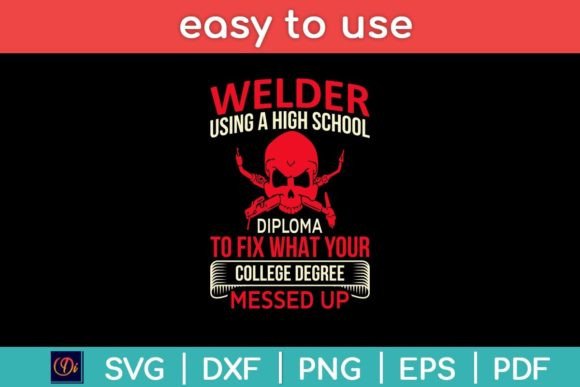
Welder Using a High School Diploma to: A Designer’s Review
As an experienced embroidery designer and product reviewer, I have spent countless hours analyzing digital assets for their real-world viability. It is not enough for a graphic to look good on a screen; it must translate seamlessly into thread, withstand the tension of the hoop, and appeal to the end consumer. Today, I am evaluating Welder Using a High School Diploma to, a design that has caught my attention for its humorous narrative and potential in the custom apparel market. This review is written for fellow embroidery designers, small business owners, Etsy sellers, and makers who need practical insight before committing this file to a client project or personal inventory.
First Impressions and Visual Personality
The first thing that strikes me about Welder Using a High School Diploma to is its distinct mood. It is witty, slightly irreverent, and deeply relatable to a specific demographic. The concept plays on the classic trope of using a diploma as a makeshift shim or repair tool, which immediately signals a blue-collar, hard-working aesthetic. For those of us in the Crafts and Graphics space, finding designs that balance humor with visual clarity is often a challenge. This design manages to convey its joke without relying on excessive text, which is a significant advantage for embroidery.
The layout appears straightforward, focusing on the central action of the welder. From a design perspective, the silhouette and line work suggest a bold visual personality. It does not rely on subtle gradients or fine photographic details, which are notoriously difficult to reproduce with thread. Instead, it leans into strong shapes and clear outlines. This makes it an ideal candidate for a machine embroidery design intended for visible wearables. The theme naturally belongs to projects targeting tradespeople, fathers, graduates entering the workforce, or anyone with a appreciation for industrial humor.
Real-World Application and Product Fit
When I consider where Welder Using a High School Diploma to would perform best, my mind goes immediately to durable, everyday items. I recently simulated a project using a similar concept for a custom embroidered tote bag. The bold lines of the welder graphic held up beautifully against the canvas texture, creating a striking contrast that drew the eye. This design is not delicate; it is robust. Therefore, it fits perfectly on heavy cotton sweatshirts, denim jackets, and work aprons.
For Etsy sellers and small shop owners, this embroidery file offers versatility. Imagine this stitched onto a high-quality flannel shirt for a holiday gift, or perhaps as a centerpiece on a rugged pillow cover for a man cave or workshop decor. It also works well for personalized gifts, such as adding a name below the graphic for a father’s day present. The humor ensures high engagement, making it a strong contender for boutique branding where personality drives sales. Whether you are creating a sweatshirt embroidery piece for a local welding shop or a tote bag design for a craft fair, the visual impact remains consistent.
Considerations for Fabric and Hoop Size
While the design is strong, practical execution requires careful planning. One must consider the hoop size relative to the detail level. If you are working with a smaller hoop, such as a 4x4 inch frame, you may need to scale the design down. However, reducing the size too much could compromise the clarity of the welder’s features or the diploma prop. I recommend testing the design on scrap fabric first to determine the minimum viable size where the shapes remain distinct.
Fabric texture also plays a crucial role. On smooth, tightly woven cottons, the stitches will lay flat and crisp. However, on textured fabrics like fleece or terry cloth, the finer details might get lost in the pile. In such cases, using a cutaway stabilizer is essential to prevent distortion. For stretchy fabrics, such as those used in baby embroidery or athletic wear, extra care must be taken to ensure the stitch density does not cause puckering. If the design includes dense fill areas, consider adjusting the density settings in your software to accommodate the fabric’s give.
Stitching Clarity and Technical Execution
From a technical standpoint, the success of Welder Using a High School Diploma to depends on how well the digital file translates into physical stitches. Since this is described as a print cut file compatible with Cricut and Silhouette, it is likely vector-based. For embroidery, this means you will need to ensure you have the correct digital embroidery file format (such as PES, DST, or JEF) for your machine. If the provider only offers SVGs, you will need to digitize it yourself or convert it using reliable software, paying close attention to stitch types.
I advise checking whether the design utilizes satin stitch for borders and fill stitch for larger areas. Satin stitches provide a shiny, professional finish but can snag if too long. Fill stitches add texture and durability but increase production time. A balanced combination of running stitches for outlines and fills for body mass usually yields the best results for this type of graphic. Always inspect the small details, such as the edges of the diploma or the welder’s tools, to ensure they do not become tangled masses of thread.
Thread color choice is another critical factor. High contrast is key here. Using dark threads on light fabric, or vice versa, will make the design pop. Avoid low-contrast combinations, such as grey on white, unless you are aiming for a subtle, tonal effect. Testing the design in black and white mockups can help you visualize the value structure before you even thread your needle.
Commercial Viability and Brand Consistency
For commercial embroidery projects, consistency is vital. If you are selling finished products, ensure that every item meets a high standard of quality. A poorly stitched embroidered patch or shirt can damage your brand reputation. Welder Using a High School Diploma to has the potential to be a bestseller due to its niche appeal, but only if executed professionally. Buyers engage with products that look clean, tight, and well-finished.
Before listing this as a small shop product or including it in your design assets portfolio, confirm the licensing terms. Can you sell finished items? Can you use it for commercial purposes? These details are not always explicit in the initial description, so it is your responsibility to verify them. Protecting your business from copyright issues is just as important as the quality of your stitching.
Final Verdict and Practical Tips
In conclusion, Welder Using a High School Diploma to is a compelling addition to any designer’s library, particularly for those targeting the trade and industrial markets. Its strength lies in its clear narrative and bold visual style. To get the best results, always test on scrap fabric, use appropriate stabilizers, and choose high-contrast thread colors. Whether you are creating a holiday embroidery gift or a line of custom apparel for a local business, this design offers a fun and professional option.
Remember, the final product is a reflection of your skill. Take the time to refine your settings, check your tension, and inspect every stitch. With careful attention to detail, this design can elevate your handmade products and delight your customers. Happy stitching!